Floating egg experiment procedure
If you’re searching for floating egg experiment procedure images information connected with to the floating egg experiment procedure topic, you have pay a visit to the ideal site. Our website always gives you hints for seeing the highest quality video and picture content, please kindly hunt and find more informative video content and images that match your interests.
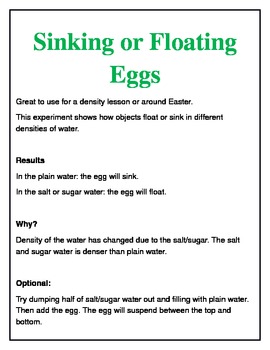
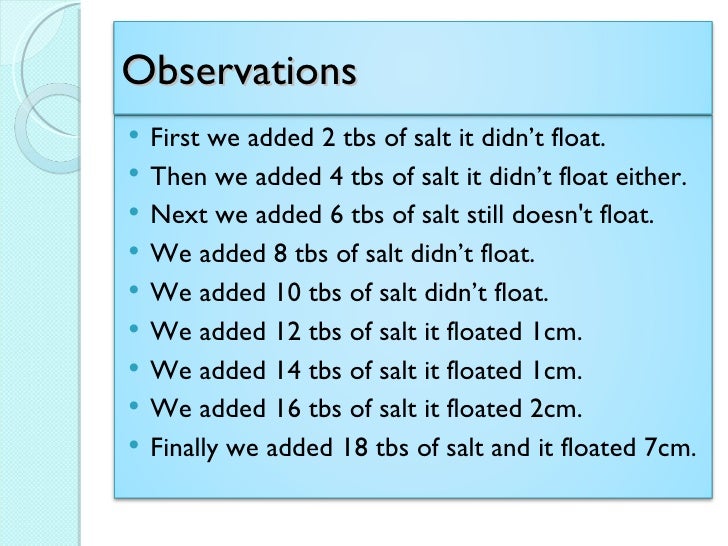
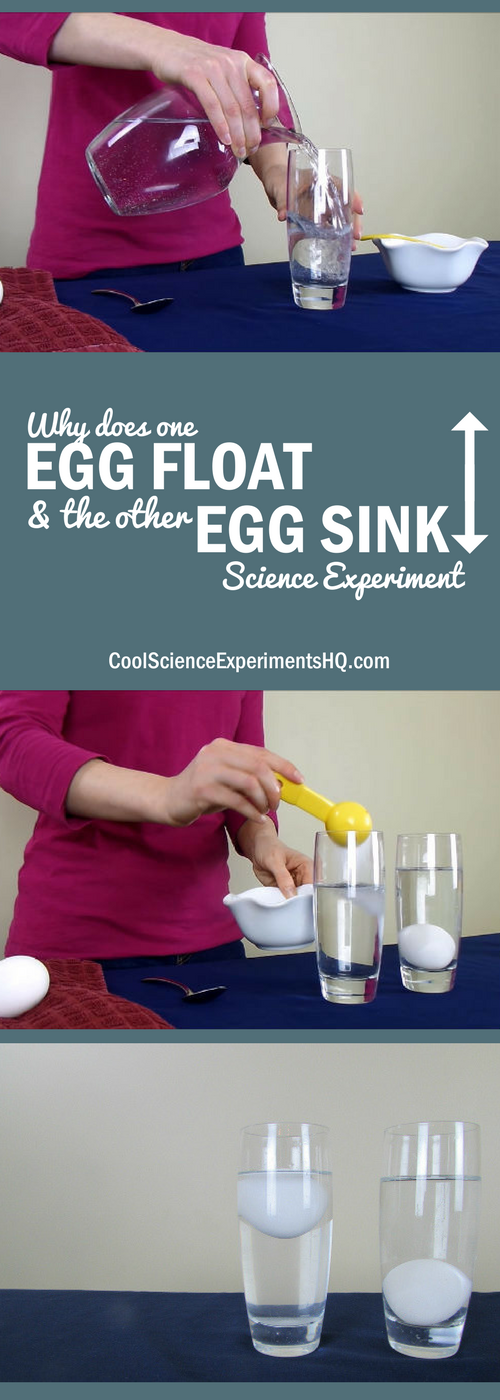
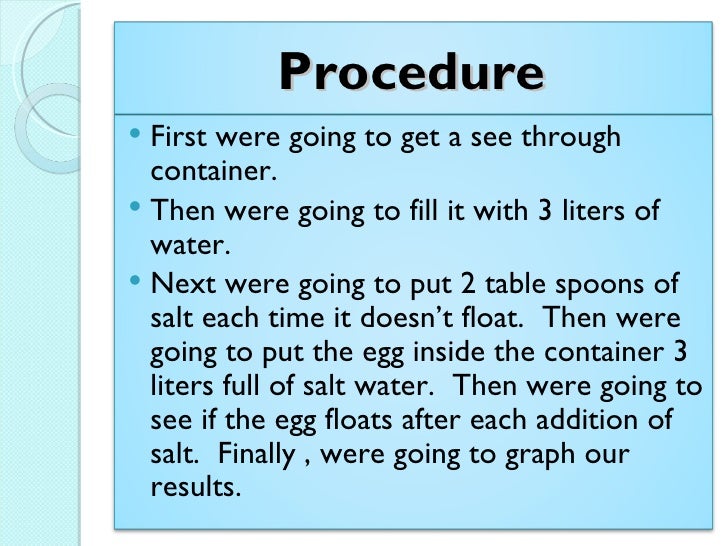
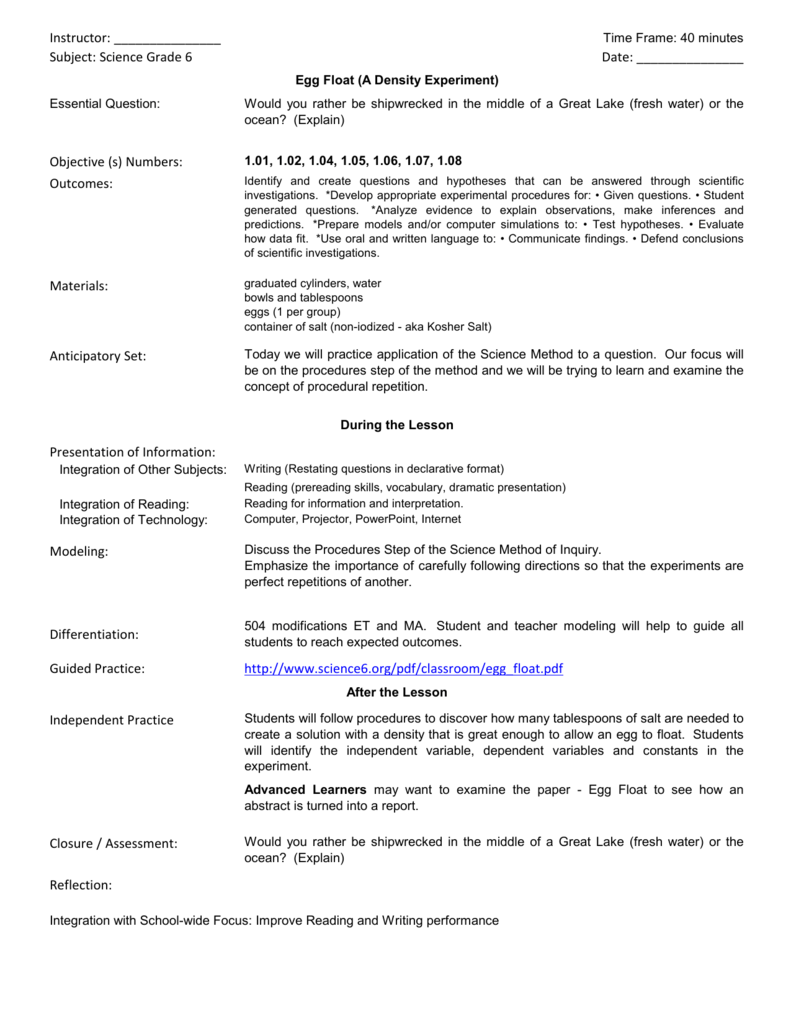
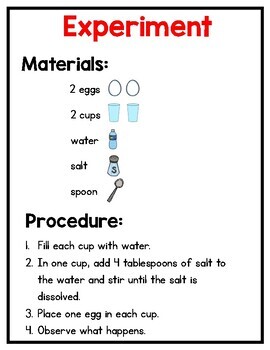
Floating Egg Experiment Procedure. When you re doing a comparing experiment like this all the variables or factors that make up the project should be the same except one in this case salt water instead of fresh water. Place one egg in each of the containers and observe which one of the eggs float in the container and which one sinks. By adding enough salt you increase the density of the water so that it is higher than the density of the egg and the egg will float. To begin your floating eggs experiment fill your two containers with water.
 Science Fair Display Board For Floating Egg Figure 5 Egg And Salt Predictions 4th Grade Science Projects Science Fair Science Projects From pinterest.com
You don t really change the volume of the water by adding salt. Make sure the amounts are equal. In the floating egg experiment we ll show you how the addition of something as simple as table salt can drastically alter what happens to eggs in water. To begin your floating eggs experiment fill your two containers with water. Fill the two containers with tap water. Drop as many eggs into plain tap water as you want but they ll all sink to the bottom.
Fill the two containers with tap water.
Salt 1 2 cups a tall drinking glass. Drop a fresh raw egg into a glass then move it left or right until you find the least salty water the egg can float in. By adding enough salt you increase the density of the water so that it is higher than the density of the egg and the egg will float. In the floating egg experiment we ll show you how the addition of something as simple as table salt can drastically alter what happens to eggs in water. As the eggs get older do they float in more glasses or sink. Other ideas to try.
 Source: teacherspayteachers.com
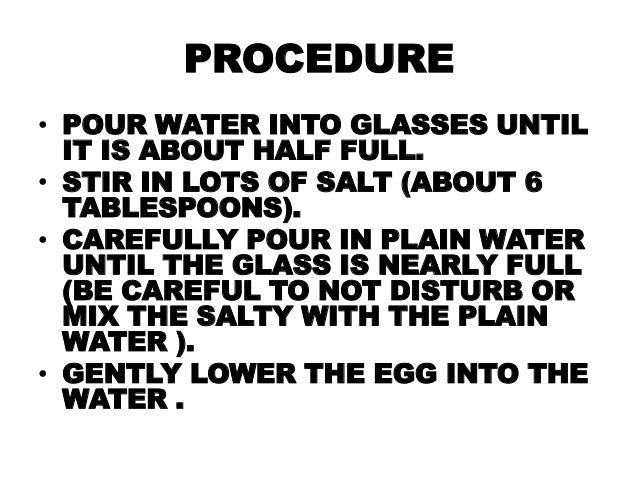
Add about 6 tablespoons of salt in one container and stir it well with a tablespoon until the salt has completely dissolved in the water. Read about what happened once you ve tested it. Stir in lots of salt. In the floating egg experiment we ll show you how the addition of something as simple as table salt can drastically alter what happens to eggs in water. You don t really change the volume of the water by adding salt.
 Source: pt.slideshare.net
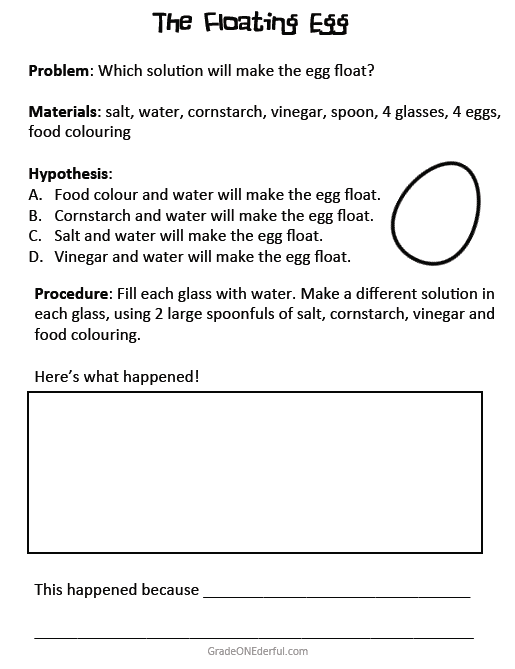
To complete this easy science activity you ll need the following. Place an egg in the glass of water and see if it sinks or floats it should sink. Start with 1 tablspoon and stir it until the salt dissolves. When you re doing a comparing experiment like this all the variables or factors that make up the project should be the same except one in this case salt water instead of fresh water. To complete this easy science activity you ll need the following.
 Source: gradeonederful.com
Stir in lots of salt. If you can get your eggs directly from a farmer. As the eggs get older do they float in more glasses or sink. In the floating egg experiment we ll show you how the addition of something as simple as table salt can drastically alter what happens to eggs in water. Put an egg in normal water watch it sink don t break the eggs and then remove the egg.
 Source: pt.slideshare.net
Repeat this each day using a new egg from the same carton. Make sure the amounts are equal. To begin your floating eggs experiment fill your two containers with water. You don t really change the volume of the water by adding salt. Pour water into the glass until it is about half full.
 Source: pt.slideshare.net
In the floating egg experiment we ll show you how the addition of something as simple as table salt can drastically alter what happens to eggs in water. When you re doing a comparing experiment like this all the variables or factors that make up the project should be the same except one in this case salt water instead of fresh water. Other ideas to try. To complete this easy science activity you ll need the following. Place one egg in each of the containers and observe which one of the eggs float in the container and which one sinks.
 Source: coolscienceexperimentshq.com
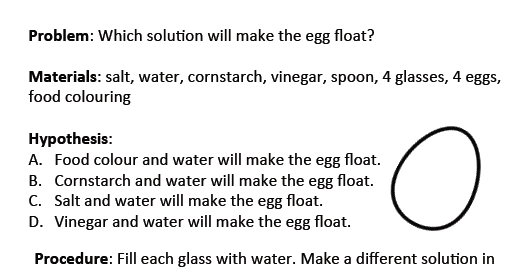
Procedure first hypothesize whether or not an egg will float in water and or if an egg will float in saltwater 1. Start with 1 tablspoon and stir it until the salt dissolves. To complete this easy science activity you ll need the following. If you enjoy this activity don t miss our colorful celery experiment or our superhero states of matter experiment. Read about what happened once you ve tested it.
 Source: slideplayer.com
Add salt iodized or non iodized to water and mix solution. Start with 1 tablspoon and stir it until the salt dissolves. Try this experiment again but instead of using an egg use a potato slice or a carrot slice. Put an egg in normal water watch it sink don t break the eggs and then remove the egg. Keep adding more salt until the egg floats.
 Source: gradeonederful.com
Add salt iodized or non iodized to water and mix solution. To complete this easy science activity you ll need the following. To begin your floating eggs experiment fill your two containers with water. Salt 1 2 cups a tall drinking glass. Fill the two containers with tap water.
 Source: slideshare.net
As the eggs get older do they float in more glasses or sink. To complete this easy science activity you ll need the following. Pour water into the glass until it is about half full. Like all of our science experiments this one is super easy and requires absolutely no scientific expertise. Stir in lots of salt.
Source: pinterest.com
Put an egg in normal water watch it sink don t break the eggs and then remove the egg. Place an egg in the glass of water and see if it sinks or floats it should sink. Repeat this each day using a new egg from the same carton. Fill the two containers with tap water. Try this experiment again but instead of using an egg use a potato slice or a carrot slice.
 Source: studylib.net
Drop as many eggs into plain tap water as you want but they ll all sink to the bottom. Like all of our science experiments this one is super easy and requires absolutely no scientific expertise. Drop a fresh raw egg into a glass then move it left or right until you find the least salty water the egg can float in. Procedure first hypothesize whether or not an egg will float in water and or if an egg will float in saltwater 1. Add about 6 tablespoons of salt in one container and stir it well with a tablespoon until the salt has completely dissolved in the water.
 Source: teacherspayteachers.com
Fill the two containers with tap water. Start with 1 tablspoon and stir it until the salt dissolves. To begin your floating eggs experiment fill your two containers with water. By adding enough salt you increase the density of the water so that it is higher than the density of the egg and the egg will float. You don t really change the volume of the water by adding salt.
 Source: giftofcuriosity.com
Stir in lots of salt. In the floating egg experiment we ll show you how the addition of something as simple as table salt can drastically alter what happens to eggs in water. Read about what happened once you ve tested it. Place an egg in the glass of water and see if it sinks or floats it should sink. Try this experiment again but instead of using an egg use a potato slice or a carrot slice.
 Source: slideplayer.com
Put an egg in normal water watch it sink don t break the eggs and then remove the egg. When you re doing a comparing experiment like this all the variables or factors that make up the project should be the same except one in this case salt water instead of fresh water. Try this experiment again but instead of using an egg use a potato slice or a carrot slice. Drop as many eggs into plain tap water as you want but they ll all sink to the bottom. If you can get your eggs directly from a farmer.
 Source:
Other ideas to try. Drop as many eggs into plain tap water as you want but they ll all sink to the bottom. Place one egg in each of the containers and observe which one of the eggs float in the container and which one sinks. Repeat this each day using a new egg from the same carton. Place an egg in the glass of water and see if it sinks or floats it should sink.
If you find this site serviceableness, please support us by sharing this posts to your favorite social media accounts like Facebook, Instagram and so on or you can also save this blog page with the title floating egg experiment procedure by using Ctrl + D for devices a laptop with a Windows operating system or Command + D for laptops with an Apple operating system. If you use a smartphone, you can also use the drawer menu of the browser you are using. Whether it’s a Windows, Mac, iOS or Android operating system, you will still be able to bookmark this website.